Tokayu studio
Tokayu is a furniture shop concept by Tata Kelola Digital. Timber, woven surfaces and simple forms make up its visual language.
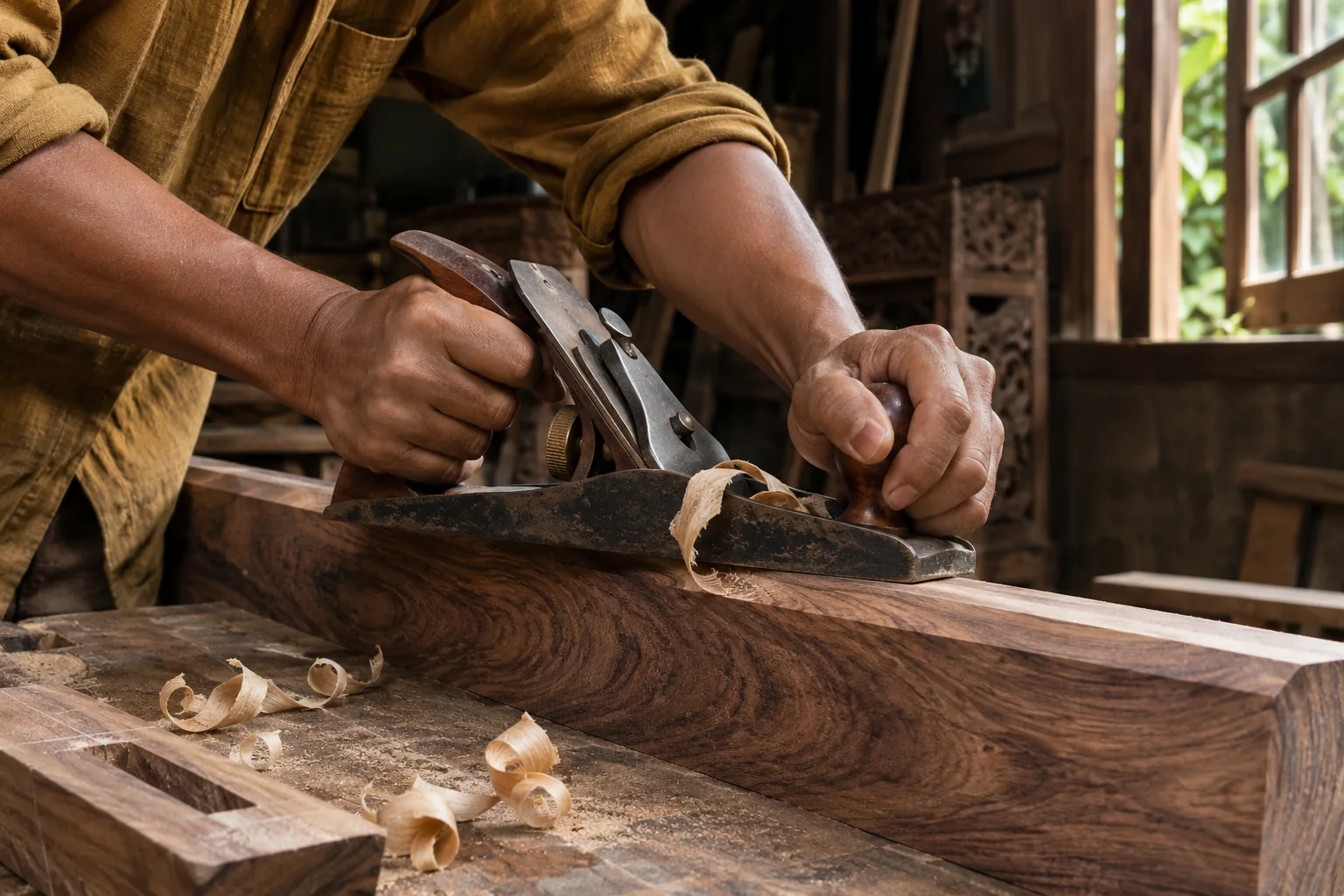
Close to the material.
We start with how objects are used. A chair back should invite someone to sit down. A dining table needs legroom. A sideboard should store things without taking over the wall.
On every product page you can check dimensions and materials before trying the shopping bag.
Browse the collectionFrom studio to room.
Slide the divider to compare the shape of the Sela chair in the studio and in a furnished room.
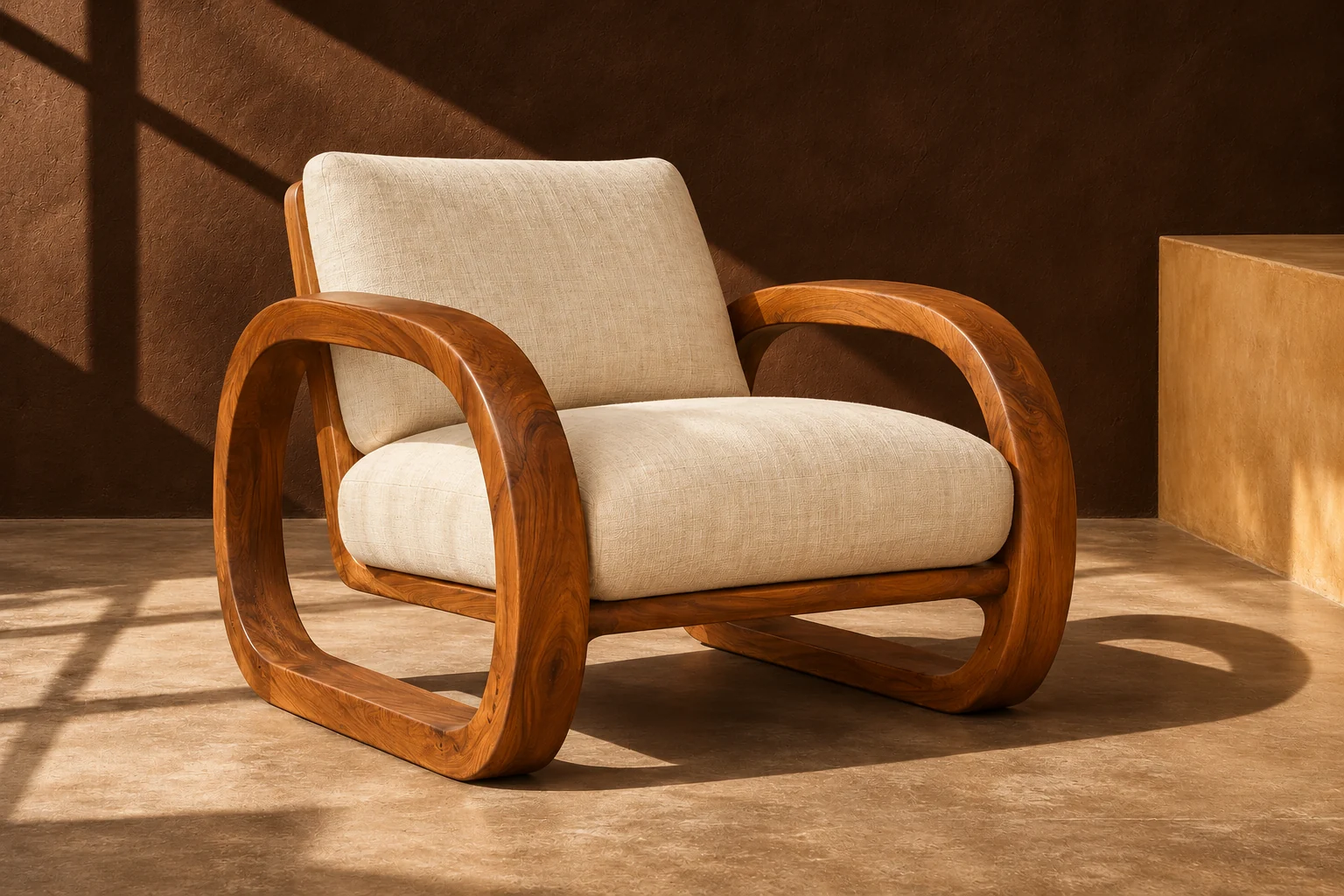
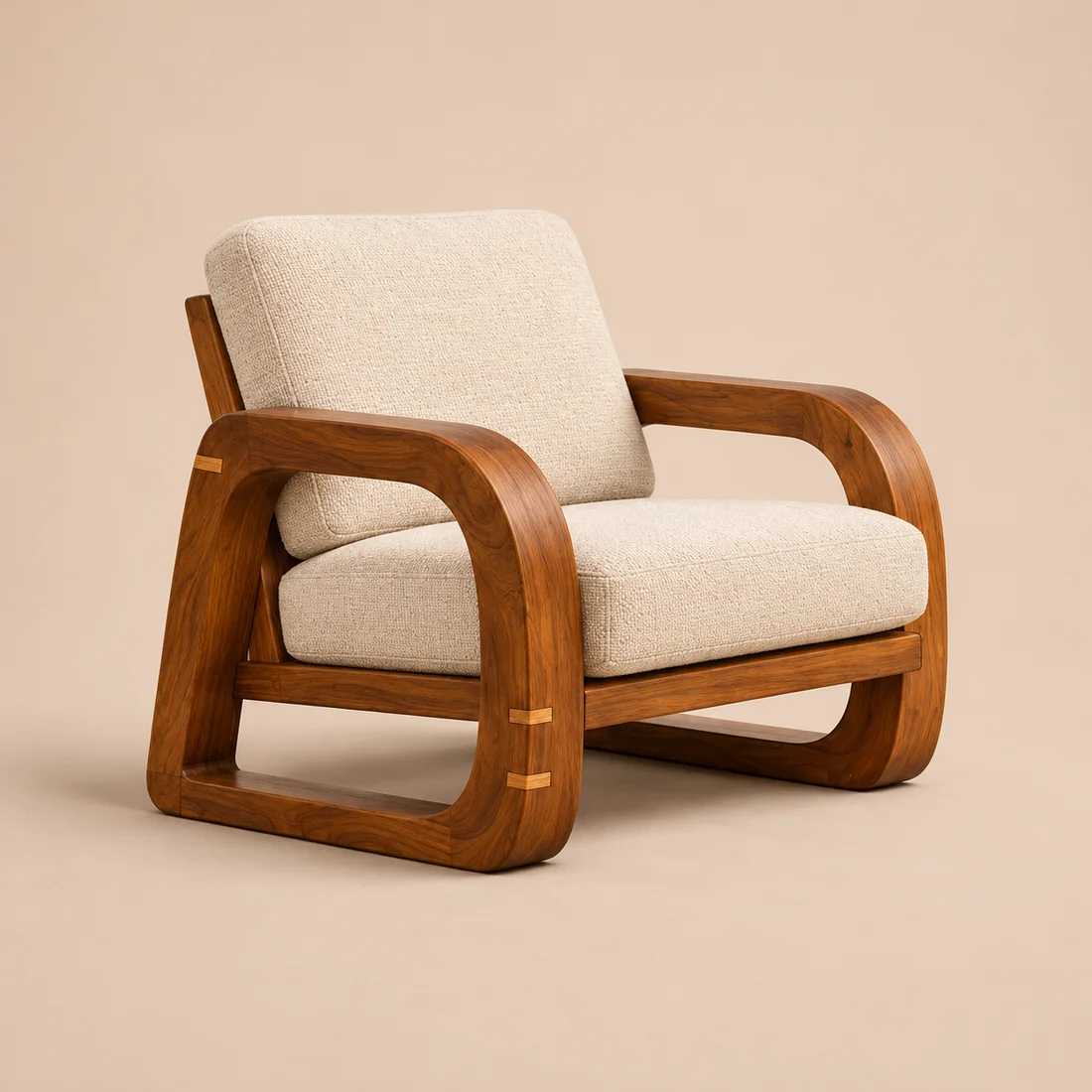 StudioRoom
Where does a chair design begin?
For the Tokayu concept, life at home is the starting point. These three questions connect the first sketch with the pieces you see in the collection.
Sketch the room in use
Begin with the activities that share a room. In a dining room, for example, a child may need to walk behind a chair while everyone else is eating.
Try the footprint at floor level
Tape an outline on the floor and slide an existing chair around it. Ambang’s single pedestal offers several seating positions, but people still need space to get back on their feet.
Look at the points of contact
Palms meet armrests, elbows meet table edges and fingers pull cabinet doors. Those are the places where curves, texture and joinery make the biggest difference.
Material library
Open a sample to see how the material shapes the object.
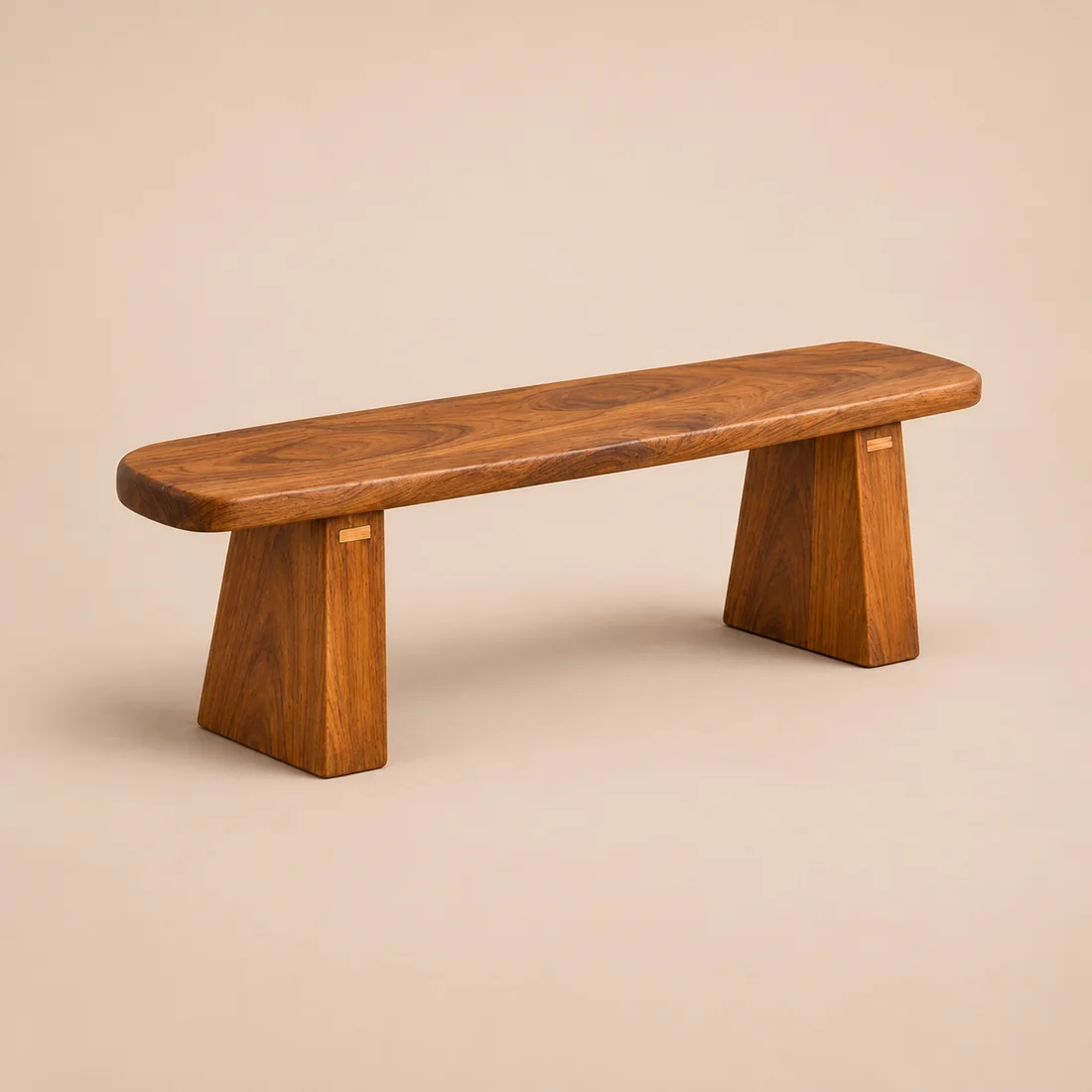 Solid teak+
The long grain is visible right out to the edge of the seat. The Sela Bench shows how far a single surface can stretch without a visual break.
Sela Bench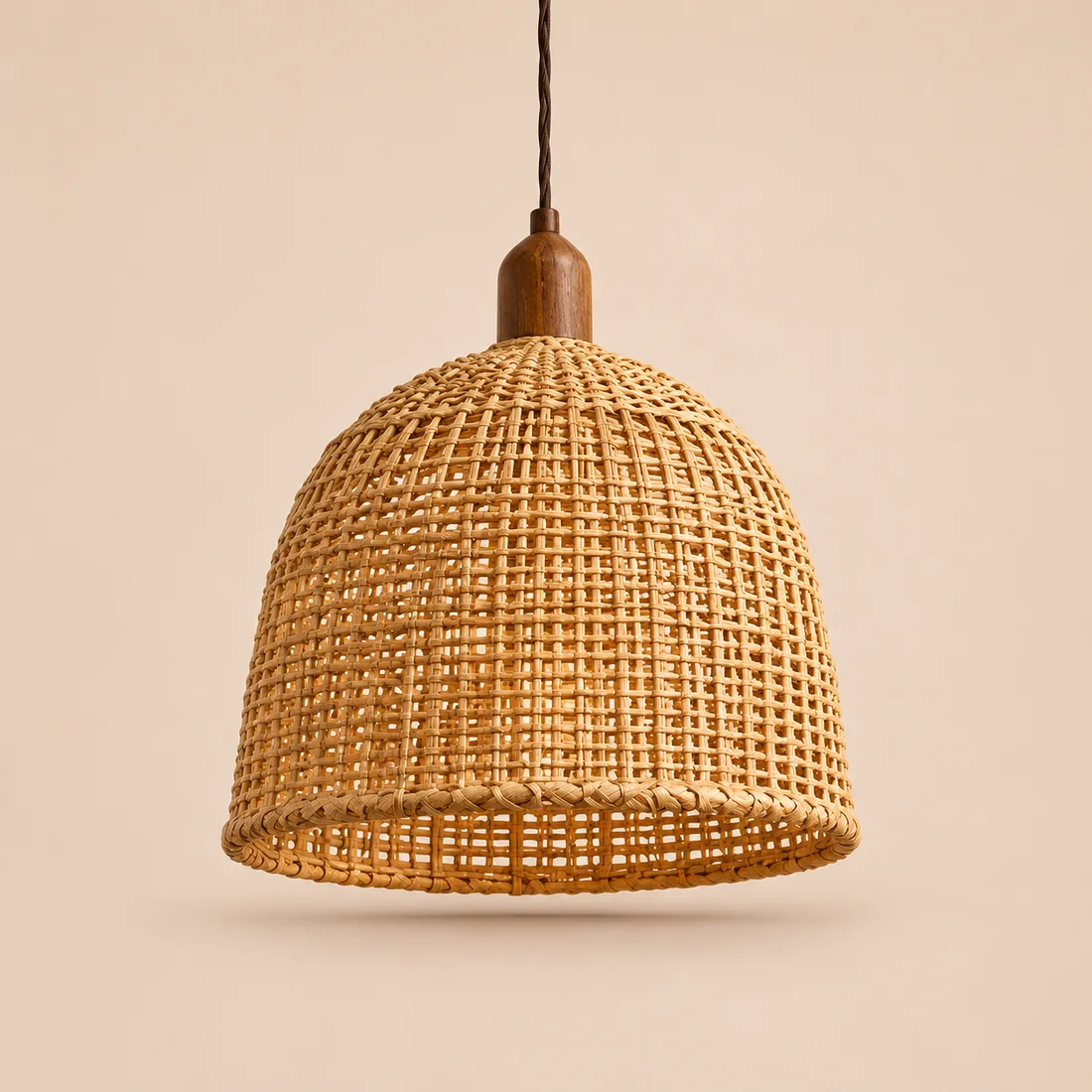 Woven rattan+
The gaps between strands are part of the shape. On Pendar they let light through, making the pendant’s shadow part of the dining room.
Pendar Pendant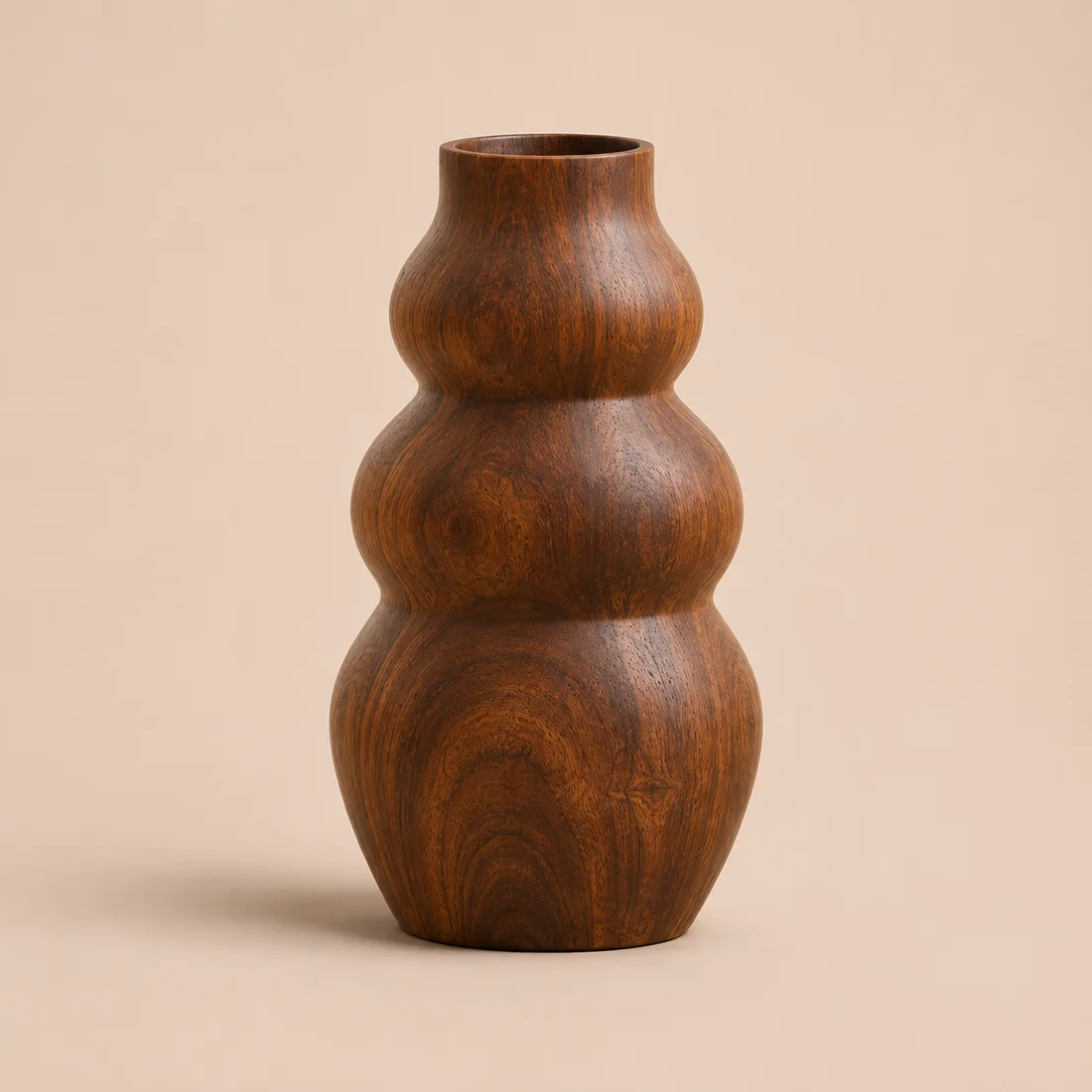 Turned timber+
Turning wood on an axis makes grain that once looked straight trace a curve. Follow it around the changing profile of the Ruas vessel.
Ruas Wooden Vessel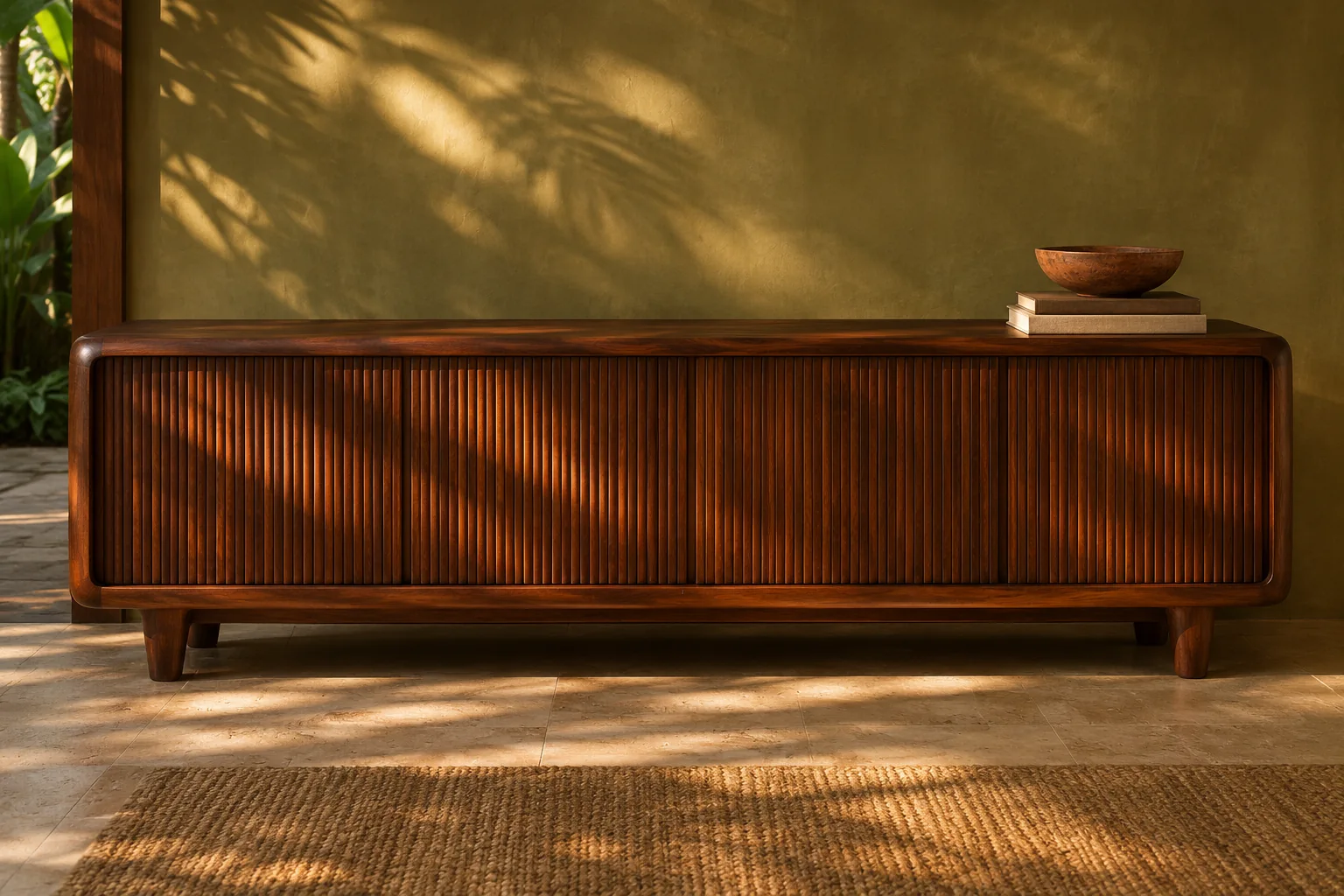
Reading the face of Kisi.
From a distance the doors read as one surface. Up close, shadows between the slats disguise the seams. Its footprint is only 40 cm deep, so plan where the cables and sockets behind it will go.
See Kisi in the living roomKisi Sideboard